The Central State Library is a beehive of intellectual activities. Since its very inception it has carved a niche for itself in academic, literary and social circles of city beautiful. The library has a regular flow of visitors representing a cross-section of the populace of this region. Students, bureaucrats, doctors, engineers, children flock to the library as it affords a wide spectrum of books covering a large range of topics. Bibliophiles have a special affinity for it, as the latest books are the earliest to reach this library.
The library has given a positive thrust to book-culture and related activities. Central State Library caters to the demand of northern sectors and villages of the Chandigarh with a network of two branches, a reading room and a mobile van. This library network development has given a new impetus to book culture. People have free access to the quintessential reading material virtually at their doorstep.
The Chandigarh Public Library System was initiated in 1955 under First Five Year Plan. This was covered under the scheme of Govt. of India.” Promotion of Art and Culture.” After reorganisation of the state of Punjab it came under the control ofChandigarh Administration.
For the growth and development of society, communication of knowledge has become increasingly important. Since a public library is for the people at large, its main function is to provide for their inspiration, recreation, information and education. The clientele it serves, covers a wide spectrum- students, researchers, intellectuals, bureaucrats, housewives, neo-literate, retired persons etc. Given a variation in the educational background of the users the library has to serve and fulfill the demands of all.
The liberal grants by the Chandigarh Administration have helped the library grow rapidly to fulfill the divergent demand of the readers. It has a State Library Planning Committee under the Chairmanship of Home and Education Secretary, and Director, Higher Education is the Vice-Chairman. Eminent educationist and nominee of Raja Rammohun Roy Library Foundation are the members. The Committee meets at regular intervals to discuss and suggest policies for the development of library systems.
To know more
Contact at 0172-2702565
Email us at: csl[at]chd[dot]nic[dot]in
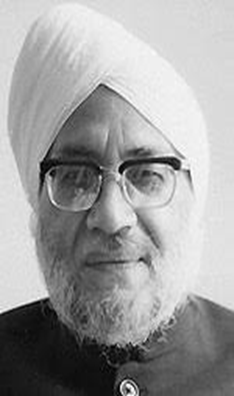
The Tarlok Singh Central State Library, located in the heart of Chandigarh, is a vibrant hub for reading, learning, and cultural enrichment. Since its inception, it has earned a valued place in academic, literary, and civic life.
Welcoming hundreds of visitors daily, our library supports a wide range of interests from education and career development to leisure reading and community engagement. With three branch libraries, we ensure access to reading material.
Our commitment to nurturing a reading culture is reflected in our timely acquisition of new books, diverse collections, and regular literary events.
Established in 1955, the Tarlok Singh Central State Library was the first public library to be set up in Chandigarh under India’s First Five-Year Plan. It was named in honor of Tarlok Singh, a distinguished member of the country’s first Planning Commission after independence. Initially supported under the Government of India’s “Promotion of Art and Culture” scheme, the library later came under the administration of Chandigarh following the reorganization of Punjab. The liberal grants by the Chandigarh Administration have helped the library grow rapidly to fulfill the divergent demands of the readers. It has a State Library Planning Committee under the Chairmanship of Education Secretary and Director Higher Education is the Vice-Chairman. Eminent educationists and nominee of Raja RamMohan Roy Library Foundation are the members. The Committee meets at regular intervals to discuss and suggest policies for the development of library systems.
The library began its journey in a government school at Sector 23 before moving to its present building, where it continues to serve the residents of the city with dedication. Over the decades, it has evolved into an important cultural and knowledge hub.The institution earned national recognition when it received the Best State Central Library of the Year 2002 award from the Raja Rammohan Roy Library Foundation.
Born on February 26, 1913, in Gujranwala (now in Pakistan), Tarlok Singh was an alumnus of the London School of Economics, where he studied under the renowned economist Harold Laski. Though his early education was uneven, he went on to join the Indian Civil Services (ICS) in 1937 and emerged as a distinguished civil servant and economist.
After Partition, as Director-General of Rehabilitation (1947–49), he played a crucial role in resettling nearly half a million refugees and introduced innovative land allocation methods such as the standard acre and graded cut. His humane and open approach toward refugees earned him deep respect.
He later served in the Planning Commission as Deputy Secretary, Joint Secretary, Additional Secretary, and eventually as Member (1962–1967), contributing significantly to the first three Five-Year Plans, earning the Commission the nickname “Tarlok Sabha.”
Internationally, he worked as Deputy Executive Director (Planning), UNICEF, and promoted regional cooperation in South Asia through initiatives that helped lay the foundation for SAARC (1985). He also established the Indian Association of Social Science Institutions (IASSI), which continues to honor his legacy through annual memorial lectures.
A prolific author, his most notable work is Poverty and Social Change (1945). For his service, he received the Padma Shri (1954), Padma Bhushan (1962), Padma Vibhushan (2000), and the Soderstrom Medal for Economics (1970) from the Royal Swedish Academy of Sciences.
Tarlok Singh passed away on December 10, 2005, at the age of 92, remembered as a man of integrity, simplicity, and tireless dedication to India’s nation-building.
The Tarlok Singh Central State Library, located in the heart of Chandigarh, is a vibrant hub for reading, learning, and cultural enrichment. Since its inception, it has earned a valued place in academic, literary, and civic life.
Welcoming hundreds of visitors daily, our library supports a wide range of interests from education and career development to leisure reading and community engagement. With three branch libraries, we ensure access to reading material.
Our commitment to nurturing a reading culture is reflected in our timely acquisition of new books, diverse collections, and regular literary events.
Established in 1955, the Tarlok Singh Central State Library was the first public library to be set up in Chandigarh under India’s First Five-Year Plan. It was named in honor of Tarlok Singh, a distinguished member of the country’s first Planning Commission after independence. Initially supported under the Government of India’s “Promotion of Art and Culture” scheme, the library later came under the administration of Chandigarh following the reorganization of Punjab. The liberal grants by the Chandigarh Administration have helped the library grow rapidly to fulfill the divergent demands of the readers. It has a State Library Planning Committee under the Chairmanship of Education Secretary and Director Higher Education is the Vice-Chairman. Eminent educationists and nominee of Raja RamMohan Roy Library Foundation are the members. The Committee meets at regular intervals to discuss and suggest policies for the development of library systems.
The library began its journey in a government school at Sector 23 before moving to its present building, where it continues to serve the residents of the city with dedication. Over the decades, it has evolved into an important cultural and knowledge hub.The institution earned national recognition when it received the Best State Central Library of the Year 2002 award from the Raja Rammohan Roy Library Foundation.
Born on February 26, 1913, in Gujranwala (now in Pakistan), Tarlok Singh was an alumnus of the London School of Economics, where he studied under the renowned economist Harold Laski. Though his early education was uneven, he went on to join the Indian Civil Services (ICS) in 1937 and emerged as a distinguished civil servant and economist.
After Partition, as Director-General of Rehabilitation (1947–49), he played a crucial role in resettling nearly half a million refugees and introduced innovative land allocation methods such as the standard acre and graded cut. His humane and open approach toward refugees earned him deep respect.
He later served in the Planning Commission as Deputy Secretary, Joint Secretary, Additional Secretary, and eventually as Member (1962–1967), contributing significantly to the first three Five-Year Plans, earning the Commission the nickname “Tarlok Sabha.”
Internationally, he worked as Deputy Executive Director (Planning), UNICEF, and promoted regional cooperation in South Asia through initiatives that helped lay the foundation for SAARC (1985). He also established the Indian Association of Social Science Institutions (IASSI), which continues to honor his legacy through annual memorial lectures.
A prolific author, his most notable work is Poverty and Social Change (1945). For his service, he received the Padma Shri (1954), Padma Bhushan (1962), Padma Vibhushan (2000), and the Soderstrom Medal for Economics (1970) from the Royal Swedish Academy of Sciences.
Tarlok Singh passed away on December 10, 2005, at the age of 92, remembered as a man of integrity, simplicity, and tireless dedication to India’s nation-building.
| Library Timings (Main Library) | |
| All Sections | 10:00 AM to 6:00 PM |
| Reading Hall and Magazine Section | 8:00 AM to 8:00 PM |
| Office | Monday to Saturday (10:00AM to 6:00 PM) |
| Library Timings (Branch Libraries) | |
| All Sections | 10:00 AM to 6:00 PM |
The TS Centre State Library, Sector 17 is typically open from 08:00 AM to 08:00 PM, Monday to Saturday. It remains closed on Sundays and public holidays. Please check locally for any updated timings.
Get in touch with us through our contact form, and we’ll respond promptly.
📍 TS Central State Library,
Sector 17, 160017 Chandigarh, India
📞 0172-2702565
📧 csl[at]chd[dot]nic[dot]in
Copyright Policy | Privacy Policy | Term and Conditions
© 2025 T.S. Central State Library, Chandigarh. Powered by visonitech
DISCLAIMER: Site Hosted By National Informatics Centre. Contents owned, maintained and updated by T.S Central State Library ,Chandigarh. All queries/Comments regarding the contents of this site may be sent to T.S Central State Library at e-mail address csl[at]chd[dot]nic[dot]in
We use cookies to improve your experience on our site. By using our site, you consent to cookies.
Manage your cookie preferences below:
Essential cookies enable basic functions and are necessary for the proper function of the website.